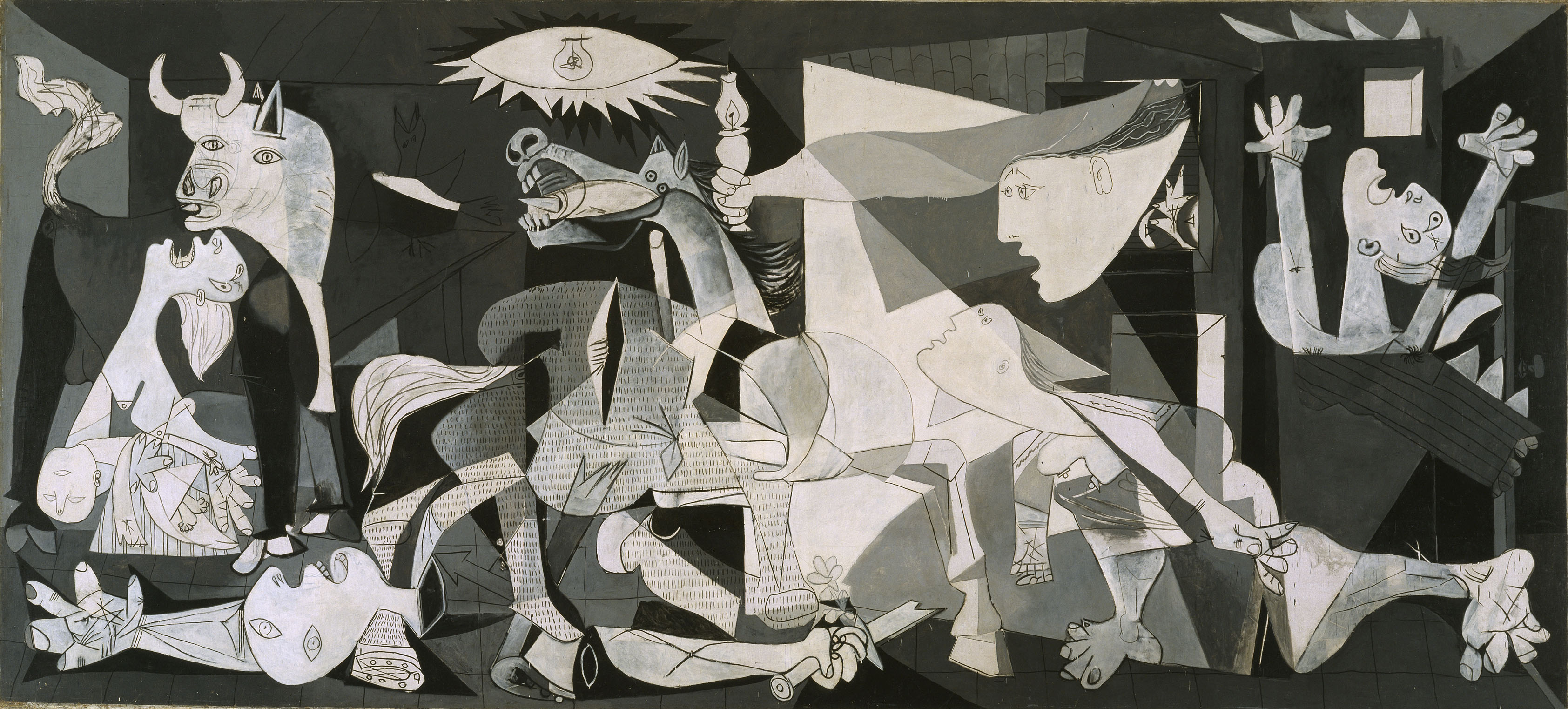
Guernica, 1937 by Pablo Picasso
Knowing that this was an anti-war piece made by an anti-war individual is one thing, but to what extent does that political messaging resonate today?
Let me begin with two questions. The first of which asks whether it is possible for writing to be political, and with that in mind, be revolutionary in its content. The second of which asks whether it is possible for reading to be political, and with that in mind, be revolutionary in its outcome.
Let these questions stew in your head for a time, as these are questions that have, are, and will be asked in either the colloquial everyday small talk or in the hallowed halls of an academy. Or so I would like to believe, and proven correct shortly after once a new video game causes some manner of controversy. In any case, the first of the two questions were asked, and addressed in some way or form, by thinkers and artists from Bertolt Brecht, Walter Benjamin, Theodor Adorno, Jean-Paul Sartre, Roland Barthes, and many more. A question that remains charged with varying sentiments, roughly divisible between two distinct camps.