Comments on Buddhism and Radical Politics

A brief collection of thoughts on the legacy of Buddhist studies and its impact on radical politics.
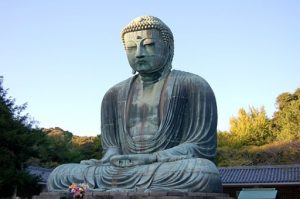
One of many Buddhas.

I find it rather interesting that at least from a position of radicalism, some have turned to those Buddhist traditions that are themselves more conventionally hierarchical, organized, and so forth. Be it Zen Buddhism or even various Vajrayana lineages, it is does appear that as far as Buddhism’s place in radical thought is concerned, there is a clear preference for particular traditions. This preference can be explained as a result of various factors, but I think two stand out especially. The first of which is the longtime emphasis of Buddhist studies towards Japanese forms of Buddhism, especially Zen, as a more ‘refined’ practice. Continue reading “Comments on Buddhism and Radical Politics”
Notes on the Death of the Author

undefined

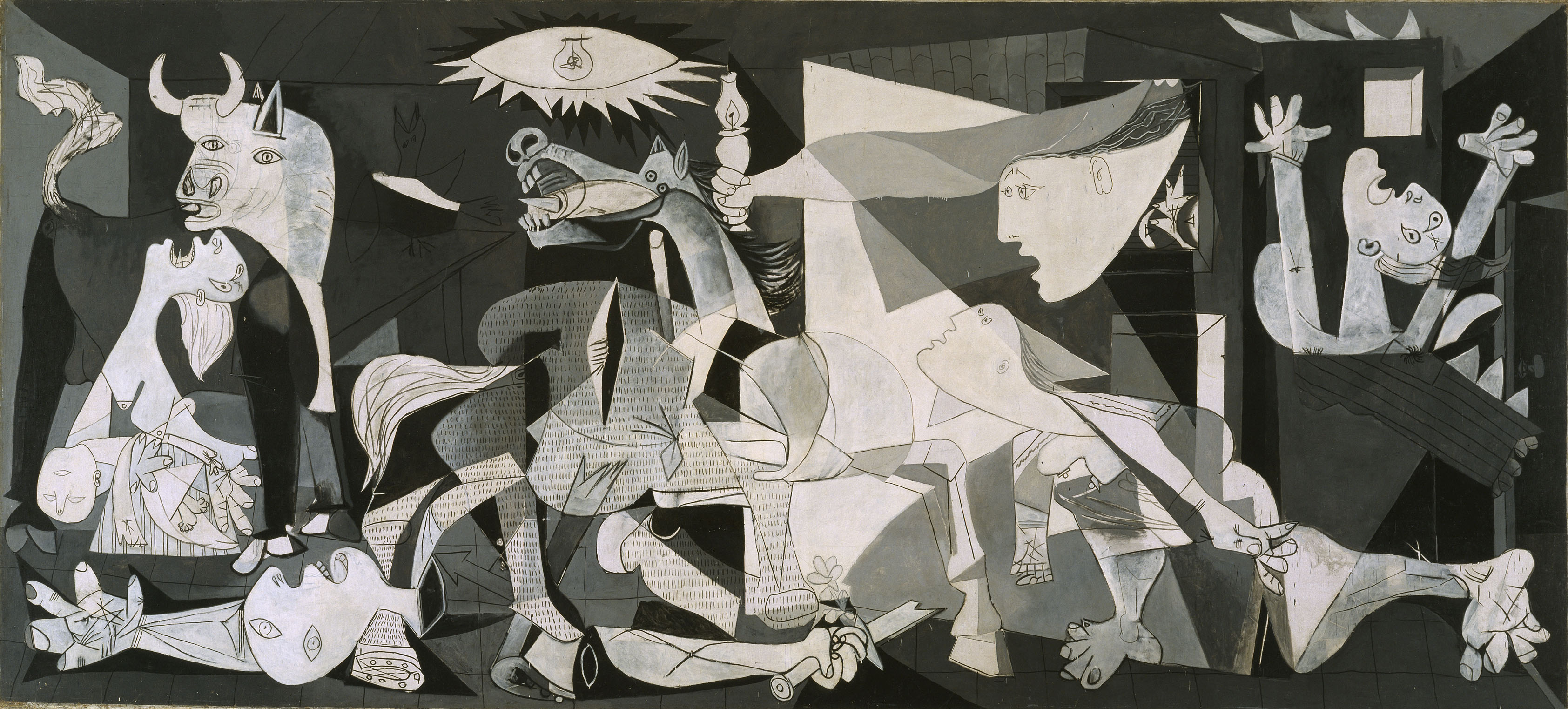
Guernica, 1937 by Pablo Picasso
Knowing that this was an anti-war piece made by an anti-war individual is one thing, but to what extent does that political messaging resonate today?

Let me begin with two questions. The first of which asks whether it is possible for writing to be political, and with that in mind, be revolutionary in its content. The second of which asks whether it is possible for reading to be political, and with that in mind, be revolutionary in its outcome.

Let these questions stew in your head for a time, as these are questions that have, are, and will be asked in either the colloquial everyday small talk or in the hallowed halls of an academy. Or so I would like to believe, and proven correct shortly after once a new video game causes some manner of controversy. In any case, the first of the two questions were asked, and addressed in some way or form, by thinkers and artists from Bertolt Brecht, Walter Benjamin, Theodor Adorno, Jean-Paul Sartre, Roland Barthes, and many more. A question that remains charged with varying sentiments, roughly divisible between two distinct camps.

Continue reading “Notes on the Death of the Author”

Capitalism as Religion and The Myth of Capitalist Nature

Originally posted at Black Fire Notes on Feb 19, 2021

A brief inquiry into the diagnosis provided by Walter Benjamin.

A religion may be discerned in capitalism – that is to say, capitalism serves essentially to allay the same anxieties, torments, and disturbances to which the so-called religions offered answers.”

“Capitalism is probably the first instance of a cult that creates guilt, not atonement.”
– Walter Benjamin, Capitalism as Religion

“Myth does not deny things, on the contrary, its function is to talk about them; simply, it purifies them, it makes them innocent, it gives them a natural and eternal justification, it gives them a clarity which is not that of an explanation but that of a statement of fact.”
– Roland Barthes, Mythologies: Myth Today


Continue reading “Capitalism as Religion and The Myth of Capitalist Nature”

Welcome

Hello, my name is Qianzi, among other aliases. I suppose for the first post I shall expand a bit on the aims of this project. In the about page, you can see that one of the goals is to make accessible theory and criticism by way of applicability. What is potentially to be covered will vary, however, special focus will be focused upon the politics of freedom and envisioning another possible world. Additionally, some crossposting with other groups may appear, so keep an eye out for those!

— Qianzi